ProMiles vs. Fuel Router: Which Fuel Optimizer Fits Your Fleet in 2026?
ProMiles has been around since the early days of PC-based fleet software. If you've worked in trucking operations for more than a decade, you've probably seen it bundled with a TMS, installed on a dispatch terminal, or used for IFTA reporting. It's a known name.
Fuel Router is newer. It launched as a standalone fuel stop optimization platform built for dispatchers and small-to-mid-size OTR fleets. No bundled TMS, no legacy desktop software, no enterprise contract required.
Both products touch fuel costs. But the way they approach the problem, the fleets they serve best, and what you actually get for the money are meaningfully different. This post breaks down where each one fits so you can decide which one belongs in your operation.
Quick Takeaways
- ProMiles is a legacy fuel tax and mileage platform with fuel optimization features bolted on. It's strongest at IFTA reporting and mileage calculations for enterprise carriers.
- Fuel Router is a purpose-built fuel stop optimizer. It analyzes your truck's actual route and tells drivers exactly where to fuel and how many gallons to buy, based on posted prices, state diesel tax, and tank level.
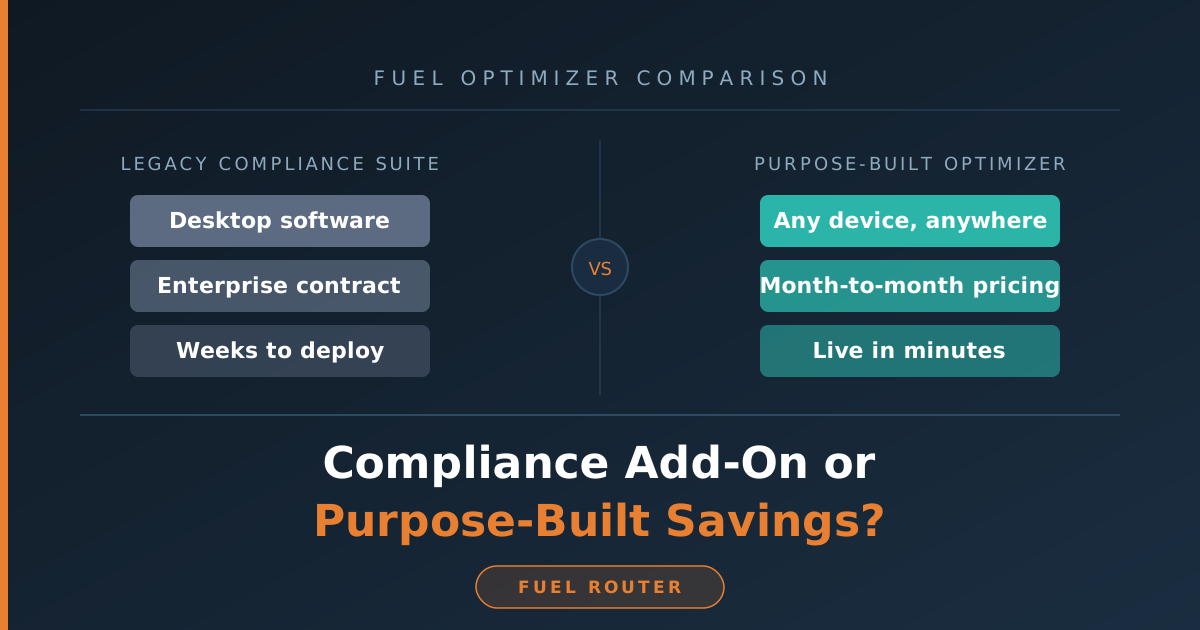
- ProMiles requires an enterprise contract and often a desktop installation. Fuel Router runs on any device and is live in minutes.
- For fleets under 100 trucks that want fuel savings without an IT project, Fuel Router is the simpler, faster path to results.
What ProMiles Actually Does
ProMiles started as a mileage calculation and fuel tax reporting tool for carriers that needed accurate state-by-state mileage for IFTA compliance. Over the years, it added fuel purchase optimization, routing, and toll cost tools to the platform.
Where ProMiles is strong:
- IFTA mileage and fuel tax reporting with state-by-state breakdowns
- PC/Hub mileage calculations used by some enterprise TMS platforms
- Fuel purchase optimization based on fuel price databases
- Established relationships with large carriers that already run ProMiles for compliance
Where ProMiles falls short:
- The platform is built around desktop software. The web and mobile interfaces exist, but they are secondary to the legacy PC product.
- Fuel optimization is one feature inside a larger compliance suite. It is not the core product, which means it doesn't get the same development focus.
- Pricing is bundled into enterprise contracts. There is no self-serve option for a 15-truck fleet that just wants fuel optimization.
- Setup typically involves IT coordination, onboarding calls, and configuration tied to the carrier's existing TMS.
ProMiles is a solid product for the problem it was built to solve: mileage compliance and fuel tax reporting for large carriers. The fuel optimization piece is an add-on to that core, not the other way around.
What Fuel Router Actually Does
Fuel Router is a fuel stop optimization platform. That is the entire product. You put in a trip (or your dispatcher does), and Fuel Router returns a fueling plan: which stops to hit, how many gallons to buy at each one, and what the projected cost is compared to a typical unoptimized fill pattern.
Where Fuel Router is strong:
- Route-aware optimization that accounts for posted price, state diesel tax differentials, distance off-route, and tank capacity
- Dispatcher-first workflow. The dispatcher plans the fuel stops and pushes them to the driver. No driver training required.
- Works with any fuel card or payment method. You don't switch your payment rail to use it.
- Self-serve setup. A fleet can be running optimized fuel plans the same day they sign up.
- Fleet insights dashboard that shows savings per truck, per route, per week
Where Fuel Router does not compete:
- IFTA mileage reporting. Fuel Router doesn't do fuel tax compliance. If you need that, you need a separate tool (or ProMiles).
- Toll cost calculations. That is outside Fuel Router's scope.
- Full TMS functionality. Fuel Router is not a transportation management system.
The simplest way to frame it: ProMiles is a compliance platform that includes fuel optimization. Fuel Router is a fuel optimization platform, period.
Feature Comparison
| Feature | ProMiles | Fuel Router | |---|---|---| | Fuel stop optimization | Yes (within suite) | Yes (core product) | | Route-aware price + tax analysis | Partial | Yes, every stop scored by posted price, state tax, and route position | | Split-fill recommendations | Limited | Yes, calculates optimal gallons per stop | | IFTA mileage reporting | Yes (core strength) | No | | Toll cost calculation | Yes | No | | Dispatcher workflow integration | Requires TMS config | Built-in, one-click push to driver | | Driver app / SMS delivery | Limited | Yes, driver gets a text with the fuel plan | | Fleet savings dashboard | Varies by package | Yes, included | | Works with any fuel card | Depends on contract | Yes | | Self-serve signup | No (enterprise sales process) | Yes | | Minimum fleet size | Typically 50+ trucks | No minimum | | Contract required | Yes, annual | Month-to-month available | | Setup time | Days to weeks | Same day |
The Real Difference: Who Each Product Is Built For
ProMiles is built for enterprise compliance teams at large carriers. The buyer is usually a Director of Operations or VP of Fleet at a company running 200+ trucks. They need IFTA calculations, mileage verification, and fuel optimization rolled into one vendor. They have IT resources to handle the integration. The fuel optimization feature is a nice bonus on top of the compliance functionality they are already paying for.
Fuel Router is built for dispatchers and fleet owners at 5 to 100 truck operations. The buyer is the owner, the fleet manager, or the head dispatcher. They don't need another compliance tool. They need their drivers to stop fueling at the most expensive truck stop on the route. They want results this week, not after a 6-week onboarding.
This is not a quality judgment. It is a fit question. A 300-truck carrier that already runs ProMiles for IFTA has no reason to rip it out. A 25-truck fleet that has never needed ProMiles has no reason to buy an enterprise compliance suite just to get fuel optimization.
The Cost Question
ProMiles pricing is not publicly listed. It is negotiated as part of an enterprise agreement, often bundled with mileage and compliance tools. Annual contracts are standard. Based on what fleet owners report, the all-in cost for the full ProMiles suite runs in the range of several hundred dollars per month per user seat, with additional costs for modules and integrations.
Fuel Router pricing is transparent and designed for smaller fleets. There is no enterprise contract and no bundled modules you do not need. The cost is tied to fleet size, and a 20-truck fleet typically pays a fraction of what a ProMiles enterprise license costs, because you are only buying fuel optimization.
The ROI math is straightforward. A semi running 110,000 miles a year at 6.5 MPG burns roughly 16,900 gallons. Route-aware fuel optimization typically saves 8 to 14 cents per gallon across a fleet by steering drivers to the right stops and splitting fills when it makes sense. That is $1,350 to $2,366 per truck per year in fuel savings. For a 20-truck fleet, that is $27,000 to $47,000 annually, well above the cost of a Fuel Router subscription.
Pair those savings with a fuel card discount program and the numbers stack even higher.
When ProMiles Is the Right Choice
ProMiles makes sense if:
- You run a large carrier (200+ trucks) and need IFTA mileage reporting as your primary use case
- Your TMS already integrates with ProMiles and your team is trained on it
- You have IT staff to manage the installation and configuration
- You want a single vendor for mileage, tolls, and fuel, even if fuel optimization is not the primary feature
- Budget is approved at the enterprise level and the contract process is standard for your company
For this profile, ProMiles is a known quantity and switching costs are high. Fuel optimization inside ProMiles may not be best-in-class, but it is bundled with tools you are already paying for.
When Fuel Router Is the Right Choice
Fuel Router makes sense if:
- You run 5 to 100 trucks and fuel optimization is the primary problem you are solving
- You do not need IFTA mileage software (or you already have a separate solution for it)
- You want dispatchers to own the fuel planning workflow without relying on IT
- You need same-day setup, not a multi-week implementation
- You want month-to-month flexibility, not an annual enterprise contract
- Your drivers cover multi-state OTR routes where state diesel tax arbitrage makes a real difference
For this profile, buying an enterprise compliance suite to get fuel optimization is like buying a tractor to mow a lawn. The right tool is the one built specifically for the job you need done.
Can You Use Both?
Yes. Some mid-size carriers run ProMiles for IFTA reporting and add Fuel Router for fuel stop optimization. The two products do not conflict because they operate on different data and different workflows. ProMiles handles your compliance paperwork. Fuel Router handles the daily question of "where should this truck fuel up today?"
If your carrier is already locked into ProMiles for mileage and you want better fuel optimization than the built-in module delivers, adding Fuel Router on top is straightforward. There is no integration needed between the two.
The Bottom Line ProMiles and Fuel Router serve different fleet profiles. ProMiles is a compliance-first platform for large carriers that want IFTA mileage, tolls, and fuel in one suite. Fuel Router is an optimization-first platform for OTR fleets that want the fastest path to lower fuel costs without an enterprise contract or IT project. If you are a small-to-mid-size fleet shopping for fuel optimization specifically, Fuel Router does one job and does it well. If you are a large carrier that needs the compliance suite, ProMiles is hard to replace.
The question is not which one is better. The question is what your fleet actually needs right now.
Find Out What Fuel Optimization Is Worth for Your Fleet
We can run your actual routes through the Fuel Router engine and show you exactly what optimized fueling would save, per truck, per month. No contract, no commitment, just the math.
Get a free fuel savings analysis →
Related Reading
- Fuel Router vs. Mudflap: Which One Actually Saves Fleets More on Diesel?
- Best Fuel Optimization Software for Fleets [2026 Comparison]
- Fuel Router vs. Manual Fuel Planning: What's the Real ROI?
How Much Are You Overpaying for Diesel?
Enter your fleet size and see your estimated annual savings in seconds — free, no email required.
Get Your Free Savings Estimate →